
The Emperor’s Paradox: Xi Jinping and the Risks of One-Man Rule
Chinese President Xi Jinping has transformed China’s governance model by dismantling decades of collective leadership in the Communist Party and concentrating power in his own hands.
Bharatiya Abroad | Edited by Dr Arvind Dube | Updated: September 30, 2025 10:15 pm UTC
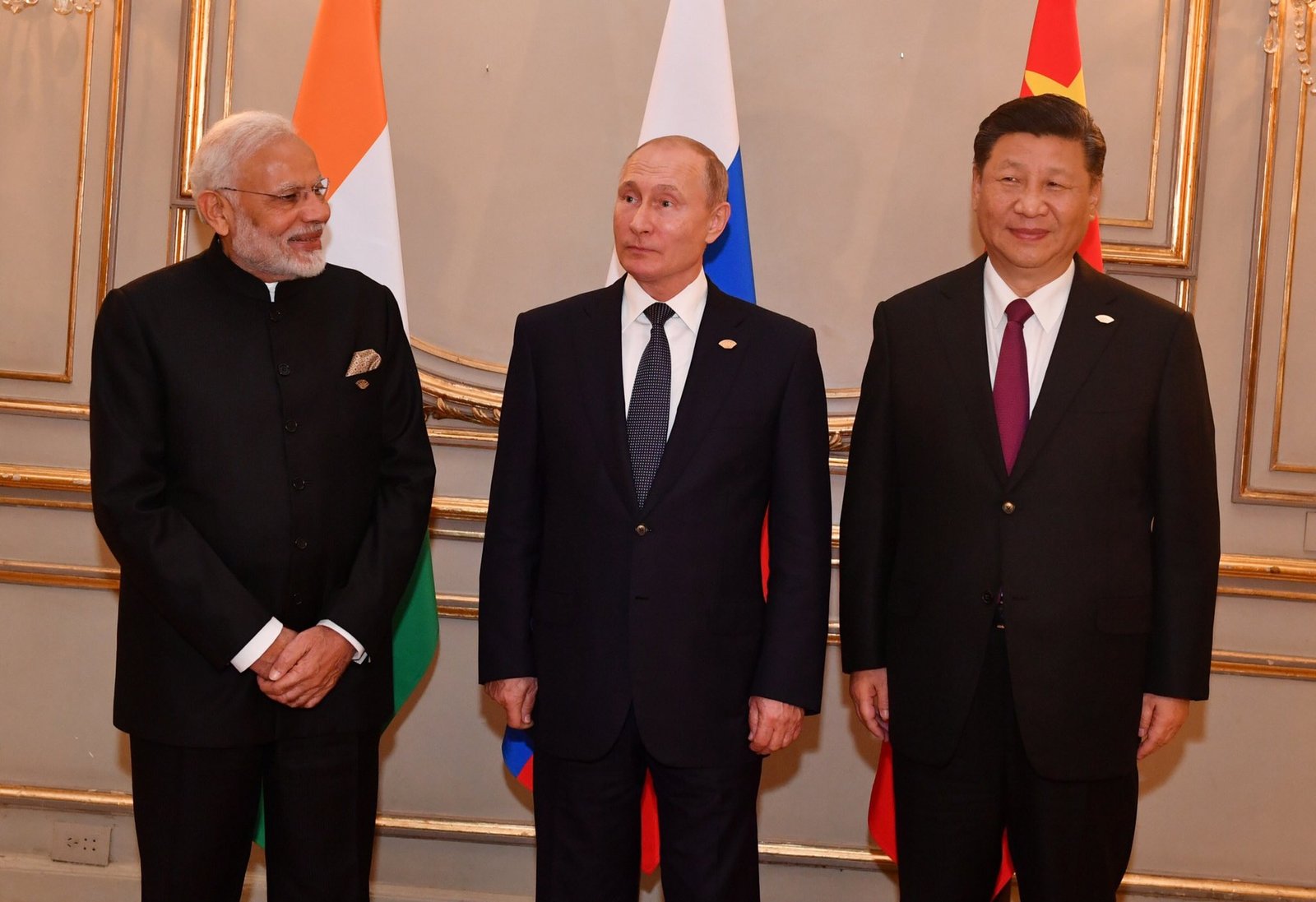
Mumbai: Chinese President Xi Jinping has transformed China’s governance model by dismantling decades of collective leadership in the Communist Party and concentrating power in his own hands. His reelection at the 20th Party Congress in 2022 confirmed what had already become apparent: Xi intends to rule indefinitely. This consolidation has made him arguably the most powerful autocrat on the planet.
But while centralization has stabilized the Communist Party in the short term, it has also created deep vulnerabilities for China’s future — and for the world.
The rise of global autocracy
American historian Anne Applebaum has described today’s authoritarian leaders as members of “Autocracy, Inc.” — not a formal alliance, but a network of rulers bound by a shared determination to cling to power. They range from Vladimir Putin in Russia to Recep Tayyip Erdoğan in Turkey, Viktor Orbán in Hungary, Mohammed bin Salman in Saudi Arabia, and Daniel Ortega in Nicaragua.
Among them, however, Xi stands apart. Unlike Ortega, whose influence is confined to a small Central American state, Xi presides over the world’s second-largest economy, the globe’s most populous country, and the most ambitious military modernization drive of the 21st century. His decisions ripple across continents, affecting everything from global supply chains to climate negotiations.
If the ultimate measure of an autocrat is not only how much power they hold domestically but how much influence they wield globally, Xi sits firmly at the top of the list.
From consensus to one-man rule
The contrast with Xi’s predecessors is stark. After Mao Zedong’s death, Deng Xiaoping built a system of collective leadership designed to prevent another all-powerful ruler. The Politburo Standing Committee functioned as a board of equals, with decision-making based on consensus. Jiang Zemin and Hu Jintao, though influential, were still “first among equals.”
Xi dismantled this arrangement step by step:
- Anti-corruption crusade: Millions of officials were investigated, eliminating rivals and intimidating potential challengers.
- Control of institutions: By creating “Leading Small Groups” chaired by himself, Xi bypassed the Standing Committee.
- Core leader status: In 2016, the party formally designated him as its “core,” elevating him above others.
- Ideology enshrined: In 2017, Xi Jinping Thought entered the Party Constitution, a privilege previously reserved for Mao.
- Term limits abolished: In 2018, presidential limits were scrapped, paving the way for lifelong rule.
- Absolute dominance: In 2022, he filled the Politburo and Standing Committee exclusively with loyalists.
As Hong Kong–based scholar Willy Lam put it: “Xi Jinping has become a sort of emperor for life.”
The short-term gains
Xi’s defenders argue that his leadership ended a period of dangerous factionalism. By 2012, competing groups — the Youth League faction, princelings, Shanghai gang, and technocrats — had weakened central authority. The People’s Liberation Army (PLA) was increasingly autonomous, raising fears of military insubordination.
Xi restored discipline, brought the PLA firmly under party control, and projected an image of unity. His assertive nationalism resonated with the public. A 2025 survey revealed that 72% of Chinese citizens view their country as the world’s most influential power.
In the eyes of many Chinese, Xi rescued the party from decline and reestablished national pride.
The long-term risks
Yet personalist autocracy comes at a price. Collective leadership, however cumbersome, provided a built-in mechanism for orderly succession and checks on misrule. By removing these guardrails, Xi has placed China’s fate in the hands of a single individual.
The risks are already visible:
- Economic missteps: Xi’s zero-COVID policy, once hailed as a success, throttled growth and fractured supply chains. Overregulation of the private sector and restrictions on foreign investment dampened innovation and triggered what economists call “economic long COVID.”
- Policy rigidity: Security concerns now outweigh economic pragmatism. Businesses face arbitrary interventions, and consumer confidence has plunged.
- Global pushback: China’s aggressive diplomacy has triggered resistance from the U.S., Europe, Japan, Australia, and India, creating a costly geostrategic containment front.
Autocracy, by nature, silences dissenting voices. When bad news is suppressed and alternative views are excluded, even a powerful leader risks catastrophic miscalculations.
The succession dilemma
Perhaps the gravest danger lies in succession. China’s history is littered with chaotic transitions: the mysterious death of Mao’s heir Lin Biao, the downfall of the Gang of Four, the sidelining of Hua Guofeng, and the ousting of Zhao Ziyang.
By abolishing institutional rules of succession, Xi has recreated the uncertainty of the Mao era. Today, at 72, visibly overworked, and without a designated successor, Xi leaves China vulnerable to instability should illness or death strike suddenly.
The party has no roadmap for what comes next — a dangerous scenario for a nation of 1.4 billion people and a central node in the global economy.
The emperor’s paradox
Xi’s achievements are undeniable. He has unified the party, subdued the military, and revived nationalism. But these strengths conceal fragility. His single-minded pursuit of national rejuvenation resembles Isaiah Berlin’s hedgehog — a creature guided by one big idea, oblivious to pitfalls.
China’s ancient tradition favored the cunning of the fox — adaptive, flexible, pragmatic. By rejecting this tradition in favor of rigid control, Xi has made the system brittle.
For now, Xi Jinping is the world’s most powerful autocrat. Yet the very concentration of power that secures his dominance may also prove China’s greatest weakness.